How Quick Does the 2026 Honda Accord Hybrid Feel When Merging and Passing?
October 14 2026,
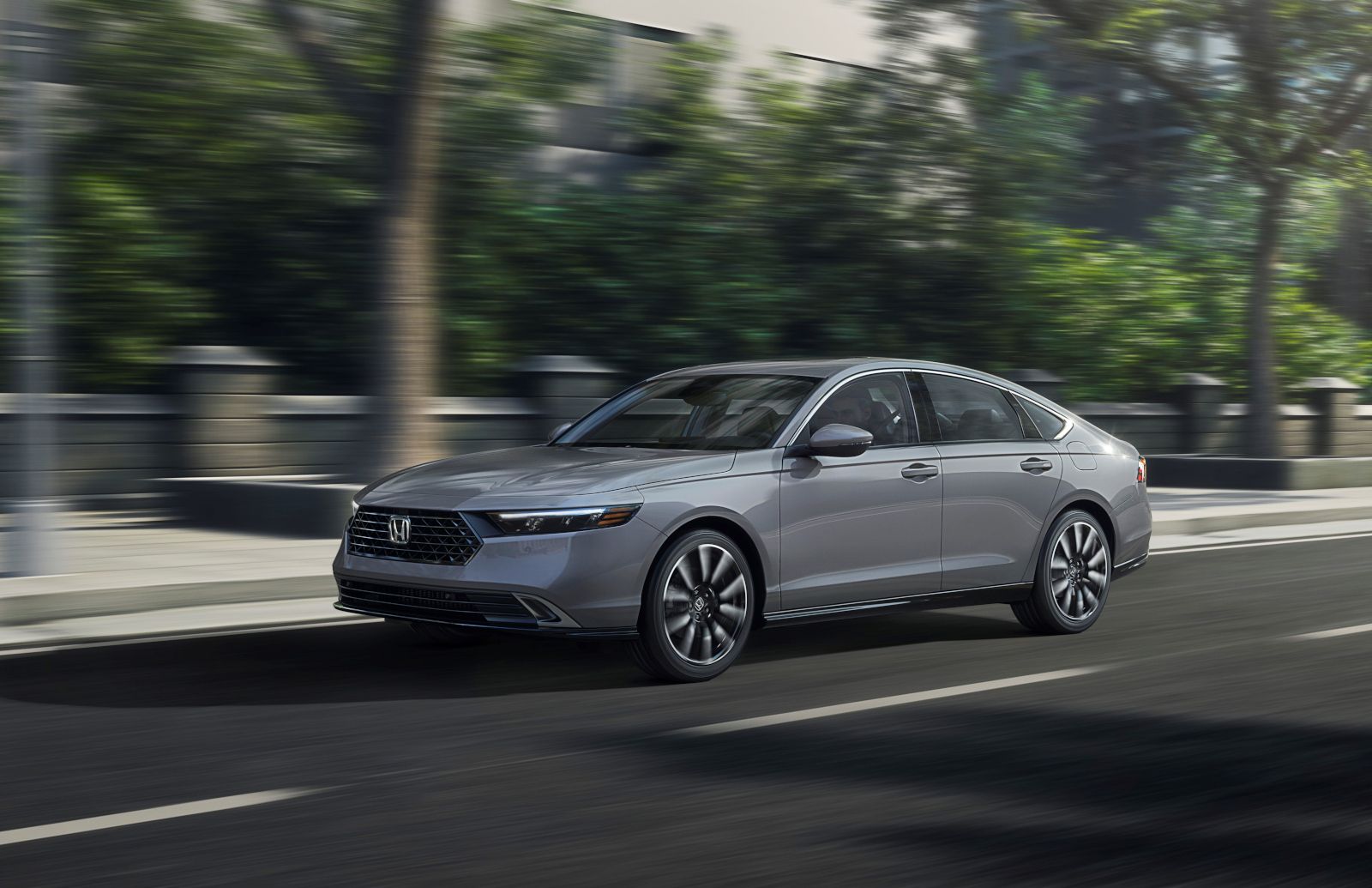
Feeling ready to merge without a second thought matters more than any spec sheet number.
Quebec drivers know the moment: a short on-ramp, a transport truck holding the left lane, and a two-lane road that asks you to pass now or wait five minutes. This is where a car’s throttle response actually gets tested, not on a track. For Accord shoppers weighing the Hybrid against the gas SE, that everyday merging feel is worth understanding before you drive either one.
What The Two-Motor Hybrid System Actually Is
The Accord Hybrid, offered on the Sport-L and Touring trims, pairs a 2.0 L four-cylinder engine with a two-motor hybrid system producing a combined 204 hp and 247 lb-ft of torque. That torque figure matters more than the horsepower number for the kind of driving this article is about: quick throttle response when you ask for a burst of speed.
The SE, by contrast, uses a 1.5 L turbocharged four-cylinder making 192 hp and 192 lb-ft of torque, paired with a continuously variable transmission (CVT). Both are competent commuter engines, but the way they deliver their power to the road is where the difference in feel actually lives.
How The Response Works In Plain Language
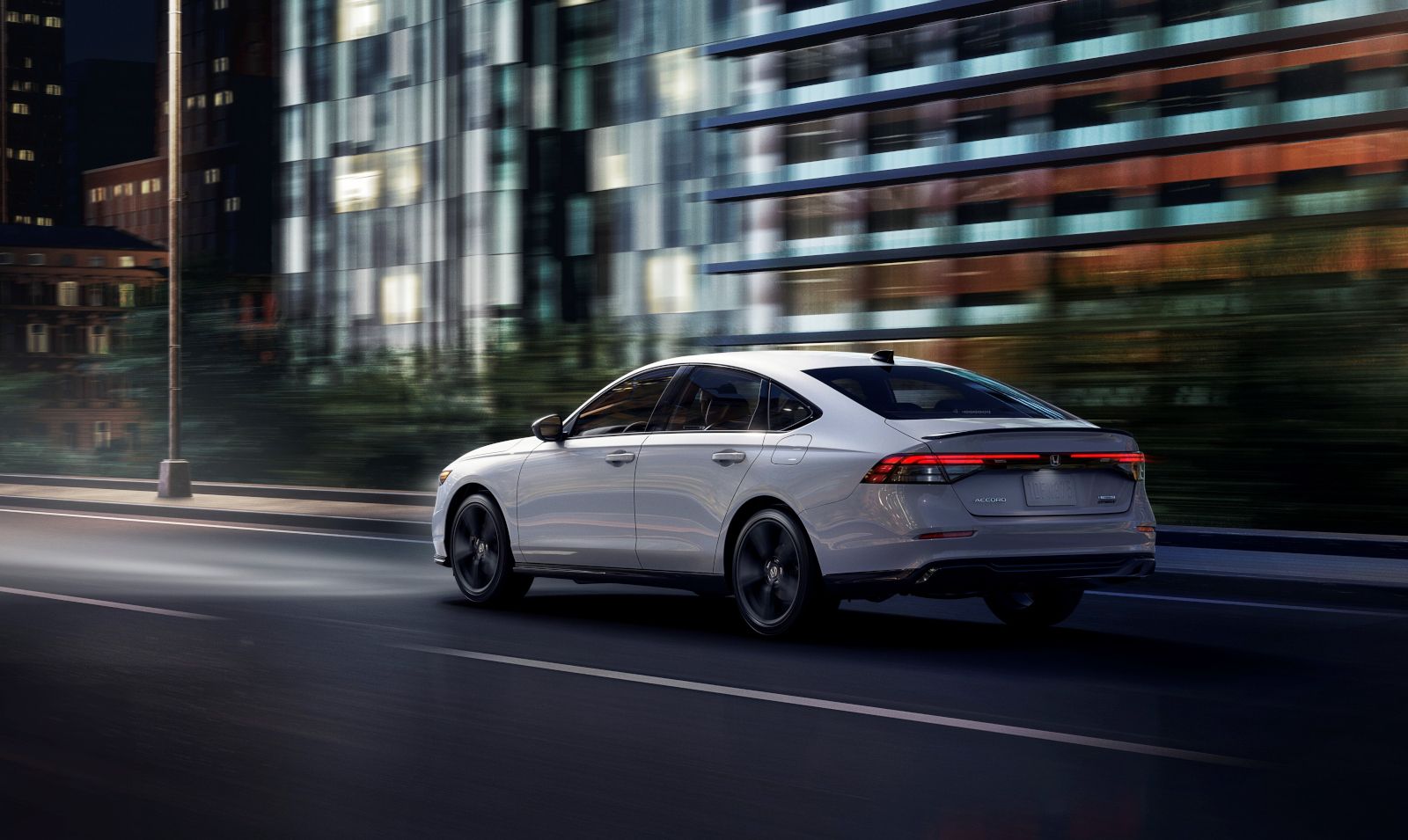
The hybrid system does not rely on a traditional transmission or CVT to put power down. Instead, the two motors work together directly, without a torque converter or mechanical belt standing between your right foot and the wheels.
That direct relationship is what shortens the gap between pressing the pedal and feeling the car respond. Electric motor torque arrives immediately at low speed and through the mid-range, exactly where a merge or a passing manoeuvre happens.
Honda pairs this with Linear Shift Control, a system that mimics the rev-and-shift feel of a conventional gearbox under hard acceleration. It is a deliberate choice: the hybrid drivetrain does not just deliver power, it delivers power in a way that still feels familiar behind the wheel.
The SE’s CVT uses Step-Shift programming to simulate gear changes at full throttle, which helps mask the flat, rubber-band feeling some CVTs produce. It is a reasonable solution for a conventional turbo four, but it is answering a different question: how to make a single-engine, single-transmission car feel responsive, rather than pairing two motors that are already inherently quick to react.
Why This Matters On Quebec Roads
A short merge lane onto the highway, or a narrow window to pass on a two-lane rural road, does not give you time to wait for an engine to build boost or a transmission to hunt for the right ratio. The hybrid’s electric assist is available the instant you ask for it, which shortens that hesitation.
This is not a claim about outright speed. It is about the gap between intention and response, the small delay that makes a driver feel like the car is behind the request rather than ahead of it. That gap is what separates a confident lane change from a tense one.
Body control and steering feel play into this too. The Accord’s suspension pairs MacPherson struts up front with a multi-link independent rear setup, and the wide front and rear tracks help keep the car settled when you ask for a quick direction change mid-pass. A car that stays composed while accelerating hard feels quicker even at the same actual speed.
Cabin quietness factors in as well. Active Noise Control, standard on the Sport-L Hybrid, reduces the engine drone that can make an accelerating car feel busier and more strained than it actually is. A calm cabin lets the driver focus on the road, not the noise.
Who The Hybrid Response Suits Best
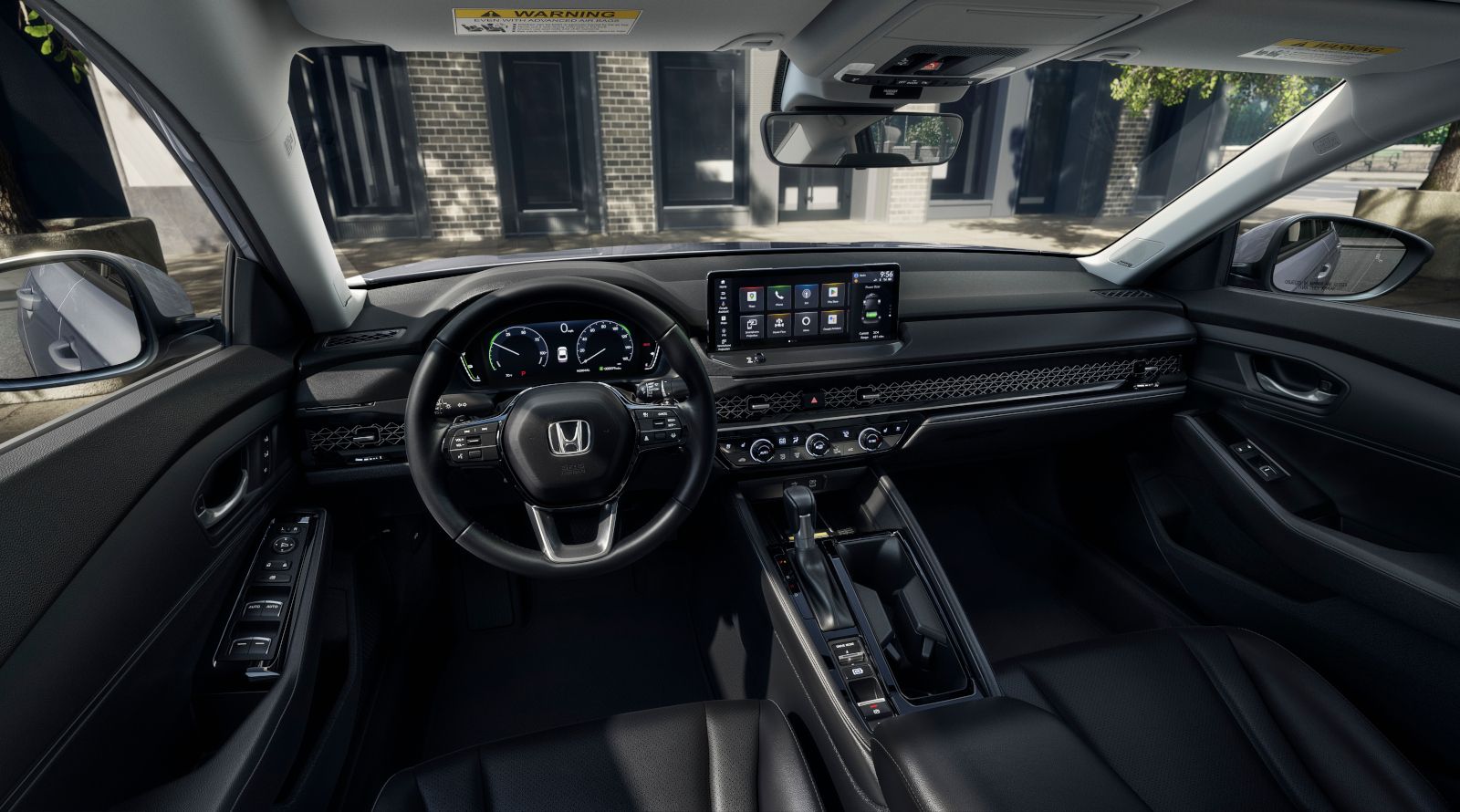
This is not a sport sedan story. Nobody cross-shopping the Accord Hybrid is chasing 0-100 km/h bragging rights. The buyer this suits is the daily highway commuter, the family hauling kids to activities, or anyone who merges onto the same busy stretch of autoroute every morning and wants that moment to feel routine instead of stressful.
For that buyer, the hybrid’s low-end pull and its 5.3 L/100km combined fuel economy rating work together: strong response when you need it, without the fuel bill of a bigger engine chasing the same feeling. The SE remains a capable, well-equipped sedan, but shoppers who specifically want a stronger, more immediate pull when re-entering traffic are the ones the hybrid was built to answer.
Honda Sensing driver-assist features, including Adaptive Cruise Control with Low-Speed Follow, Lane Keeping Assist System, and Blind Spot Information System with Cross Traffic Monitor, come standard across the lineup. They are not the reason to choose the hybrid’s response character, but they support the same confidence: knowing the car is watching your blind spots while you commit to a pass.
Judging The Merge Feel For Yourself
The two-motor hybrid system in the Accord Sport-L and Touring is built around immediate torque delivery, a composed chassis, and a quiet cabin, three things that add up to a calmer feeling when traffic asks you to move quickly. The SE offers its own honest, turbocharged character but answers the same question in a different way.
The only real way to feel this difference is behind the wheel, on the kind of road you actually drive. Visit Lallier Honda PAT in Pointe-aux-Trembles to drive the Accord Hybrid’s merge and passing response back-to-back with the SE, and ask our team about current trim availability for your visit.